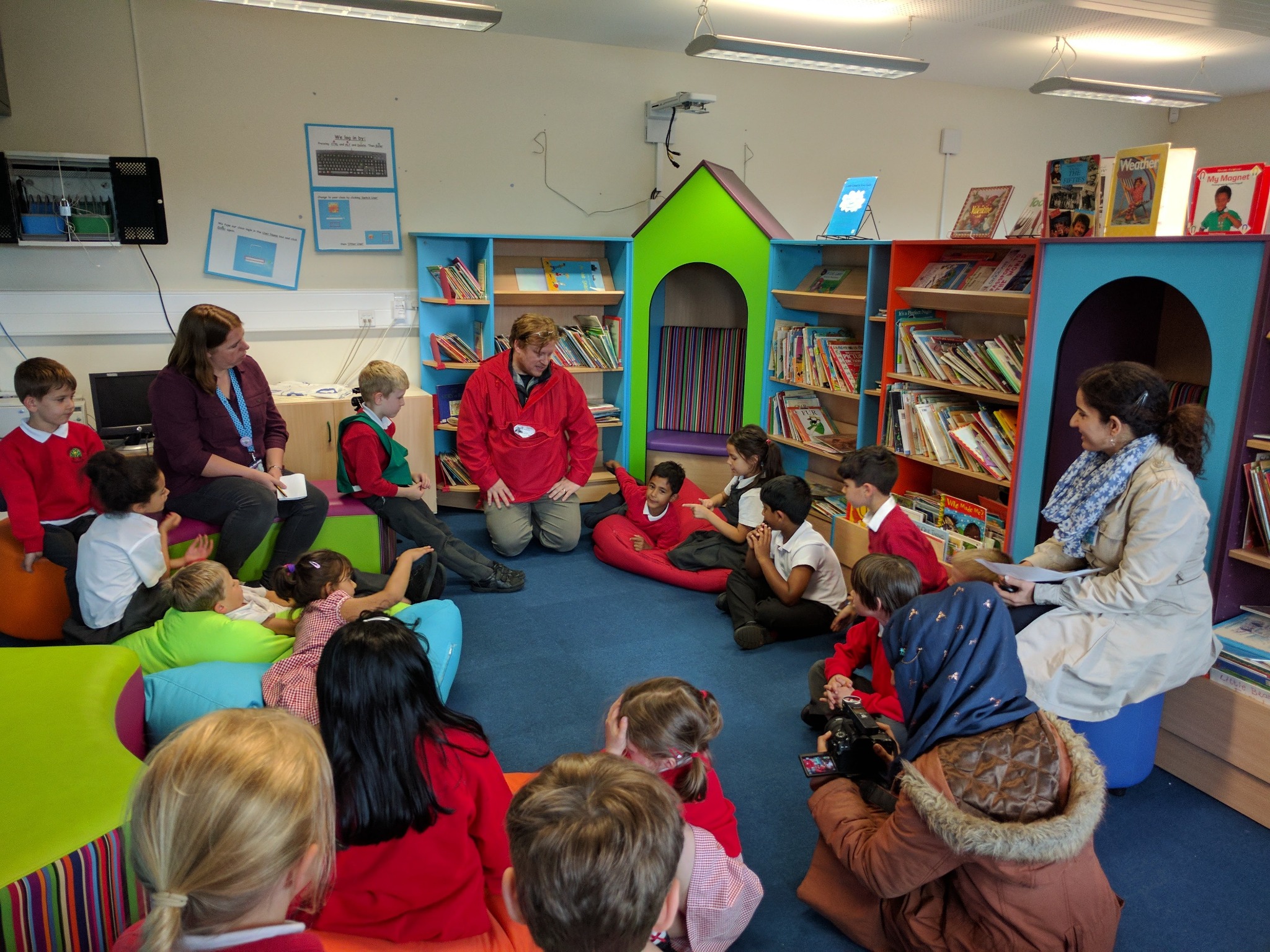
Children were spoken to about air pollution, not invited to investigate it.
Research
A six-week enquiry joined observation, local mapping, making and King’s College London sensors.
Finding / output
The programme produced children’s maps, models and practical clean-air guidance. These are workshop outputs; no measured health improvement is claimed.
AUTHENTIC PROJECT EVIDENCE · PRS ARCHIVE
POWER TO CHANGE · PEOPLE / PLACE
Who is missing from the conversation?
Question
Existing engagement routes were losing people whose experience was needed.
Research
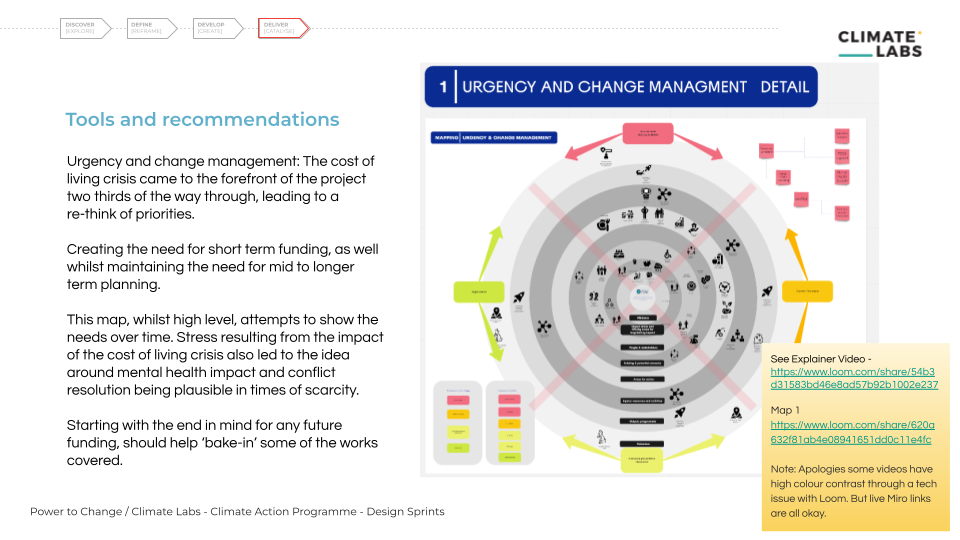
We developed a six-month programme of sprints and workshops to widen engagement with underrepresented communities.
Finding / output
The cost-of-living crisis changed priorities during the project. Recommendations paired immediate short-term support with longer-term funding and planning.
AUTHENTIC PROJECT EVIDENCE · PRS ARCHIVE
MAKING GREEN · PEOPLE / PLACE / PLANET
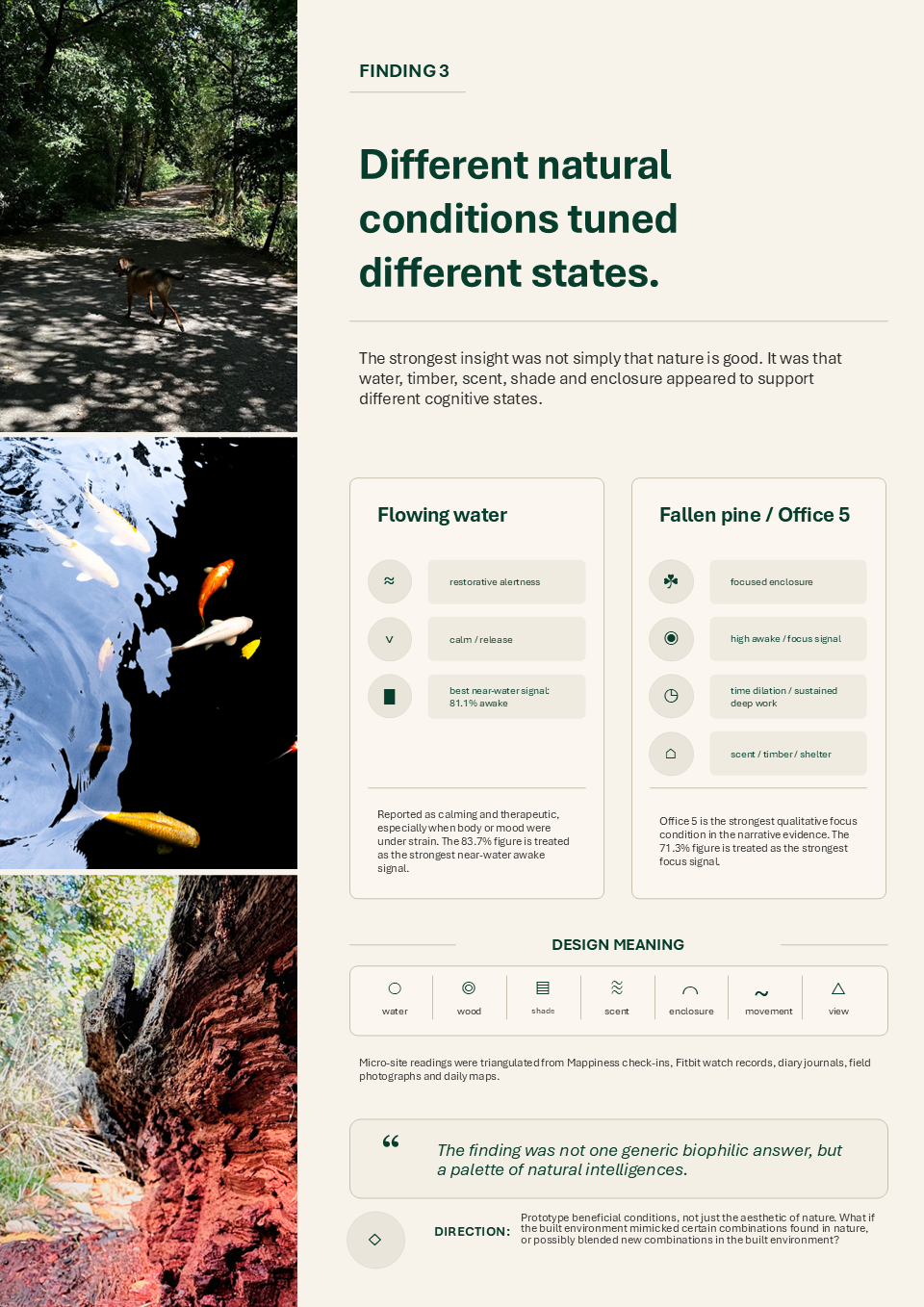
How does place affect how we feel?
Question
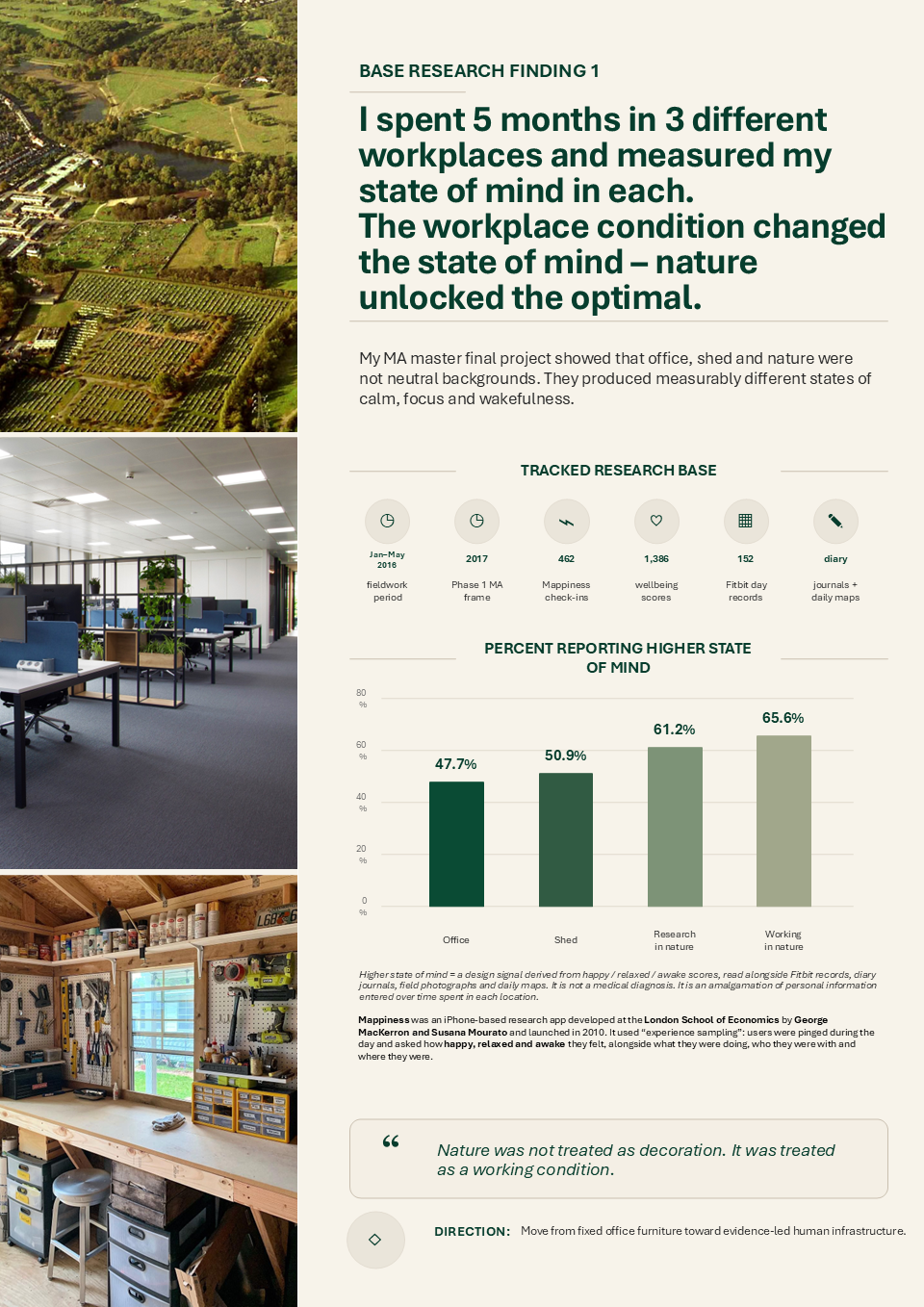
Our starting question was whether place could change attention and recovery. A feeling was not enough.
Research
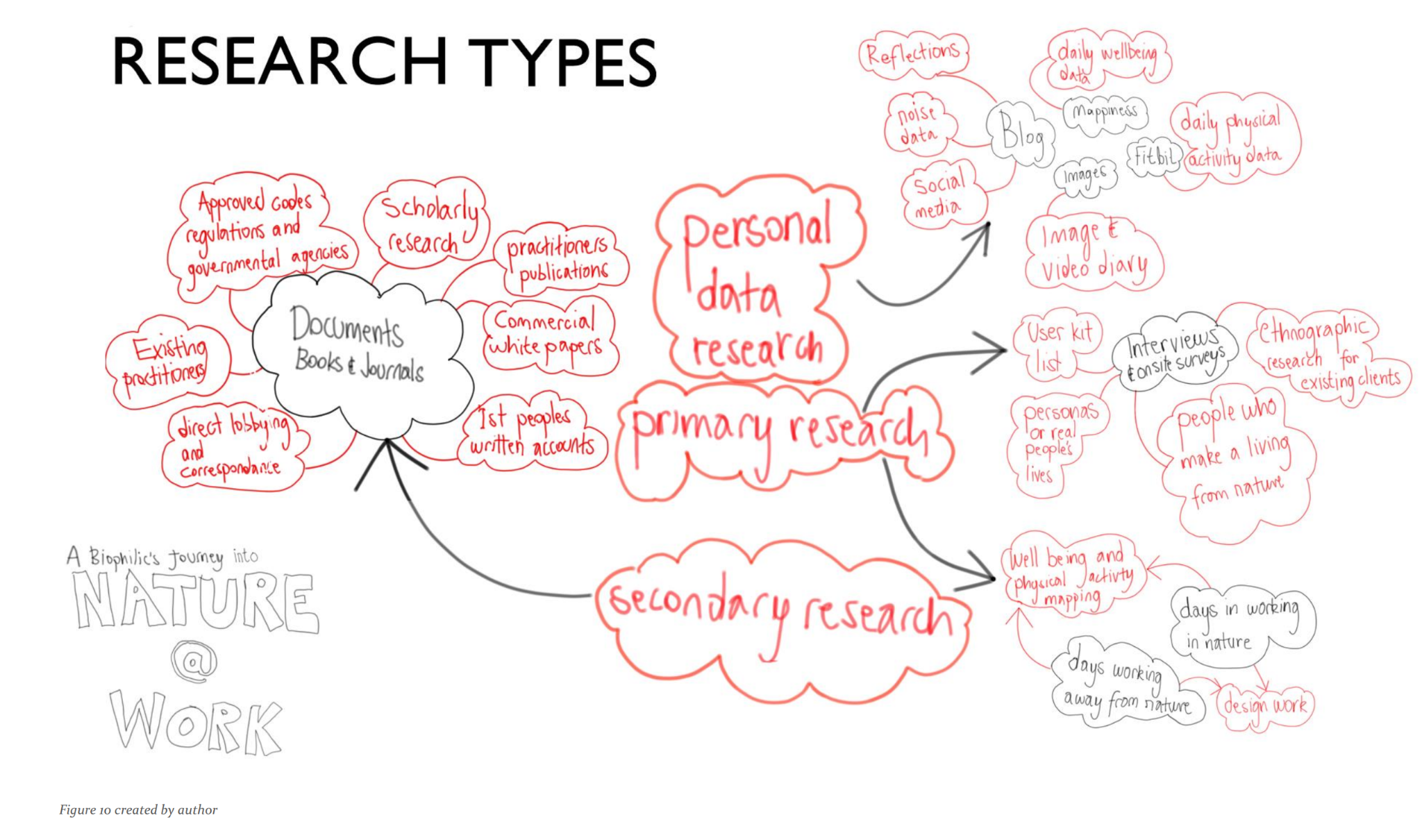
A 21-week personal study combined tracking and reflection with fieldwork alongside woodland makers and craftspeople.
Finding / output
The study combined 461 Mappiness check-ins with diaries, photographs and Fitbit tracking. Fieldwork showed the importance makers placed on independence and working on their own terms; a proposed local enterprise model was shaped around that finding.
Research boundaries and validation +
Making Green was a personal situated inquiry. It followed one designer as both participant and observer. The 461 Mappiness submissions generated approximately 4,000 individual fields. Wider manual records exceeded 2,500; records including automatic Fitbit tracking exceeded 20,000. These are different, potentially overlapping counts, not participant numbers or totals to add together. The study generated questions and design criteria; it is not clinical or causal proof. The enterprise model was a proposal, not an operating business.
HOLOS has been discussed with inclusive-environment specialists for critique and potential collaboration. Interest is not presented as certification, endorsement or independent scientific validation.
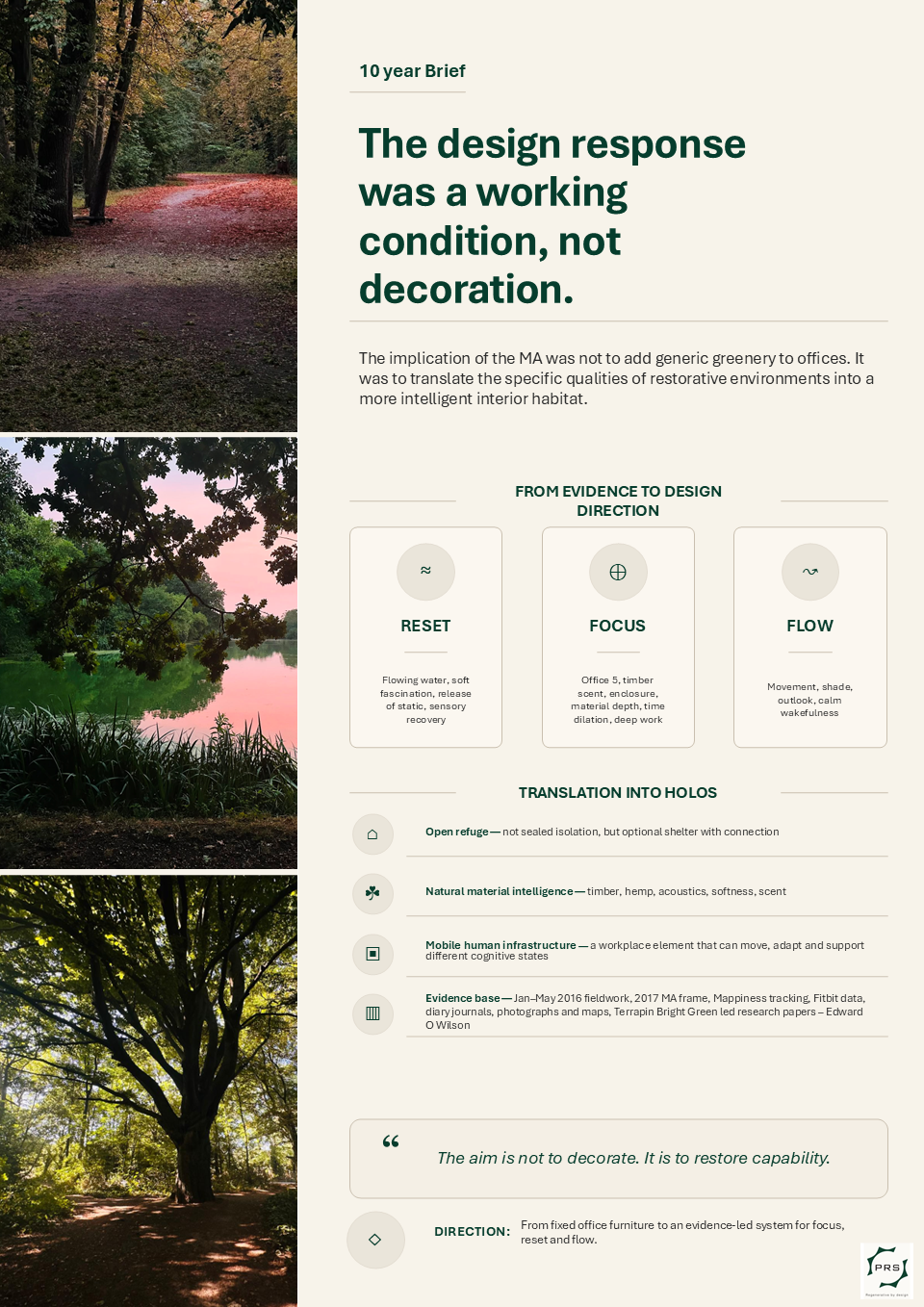
MAKING GREEN / RESEARCH FINDINGS
The evidence travels.
From a personal study of place and state of mind to design criteria for rest, focus and flow. Open a board to read the findings.
01 / PLACE + STATE OF MIND ↗02 / DIFFERENT CONDITIONS, DIFFERENT STATES ↗03 / FROM FINDINGS TO DESIGN ↗
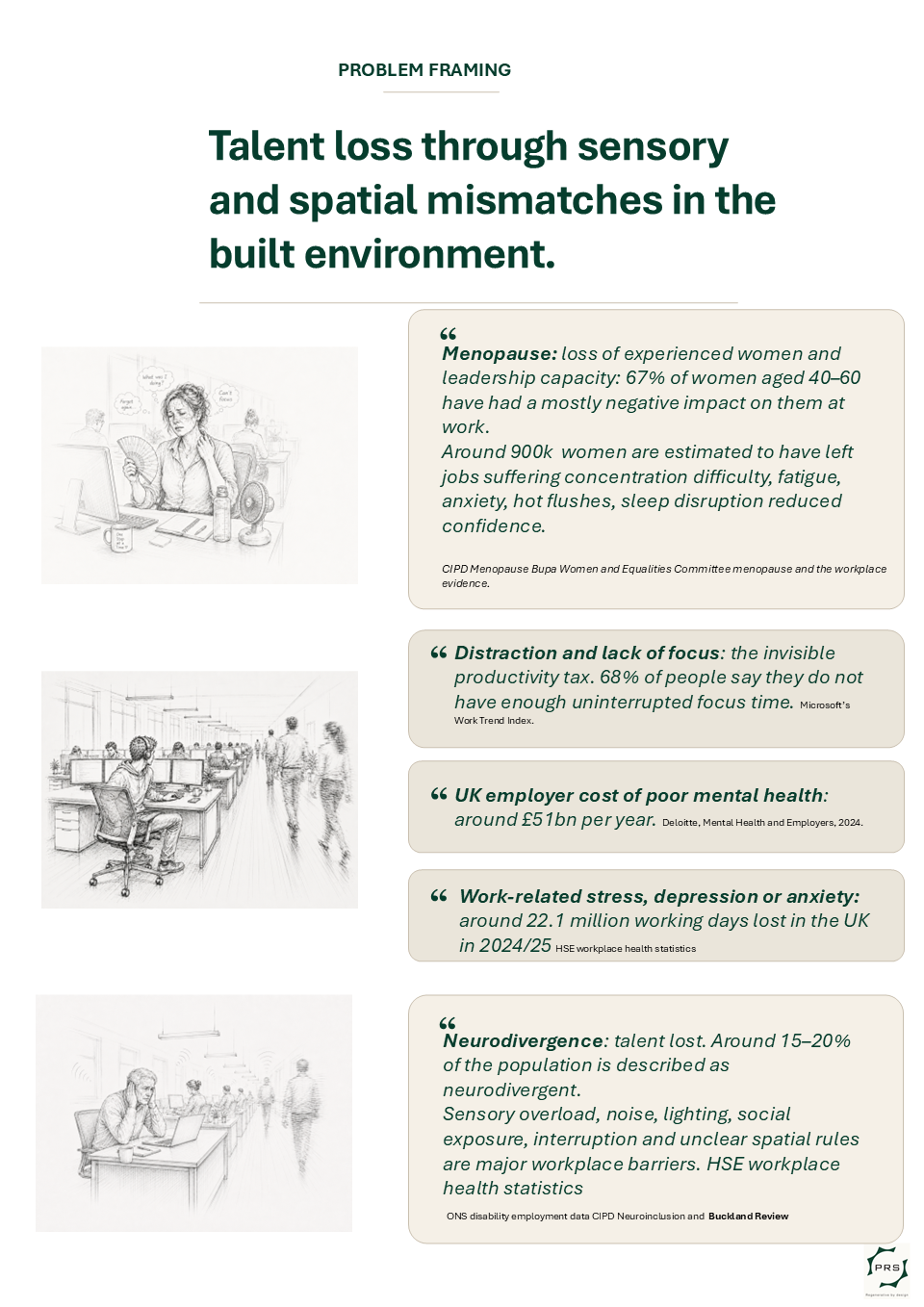
THE ISSUES / SENSORY + SPATIAL MISMATCHES · OPEN TO READ ↗
THE QUESTION BEHIND THE DESIGN
What is the space asking people to cope with?
Noise, distraction and a lack of choice can make work harder. The research asks how different settings might support different needs, rather than expecting everyone to work in the same way.
These findings come from a personal situated study. They inform design questions and prototypes; they do not establish clinical outcomes or replace live testing with users.
FROM THE MA / RESEARCH METHODS
UPCOMING ILLUSTRATED BOOK
From research to nature at work.
An illustrated account of Phil Spencer’s MA research into nature, wellbeing and the places we work. The forthcoming biophilic design release will bring together the study, its findings and the questions it raises for design.
We design and research across business types, sizes and sectors. What does your organisation need its space to do?
15-SECOND SPATIAL MODEL STUDY / CONCEPTUAL MODELS, NOT COMPLETED PROJECTS Watch the full study ↗
BY INVITATION / PROJECTS IN DEVELOPMENT
Want to see more detail?
We can share selected projects being developed with our collaborators, including HOLOS, by invitation. Tell us what you would like to explore. Confidential material requires company details, a signed NDA and our approval; an initial conversation does not.Request project access →